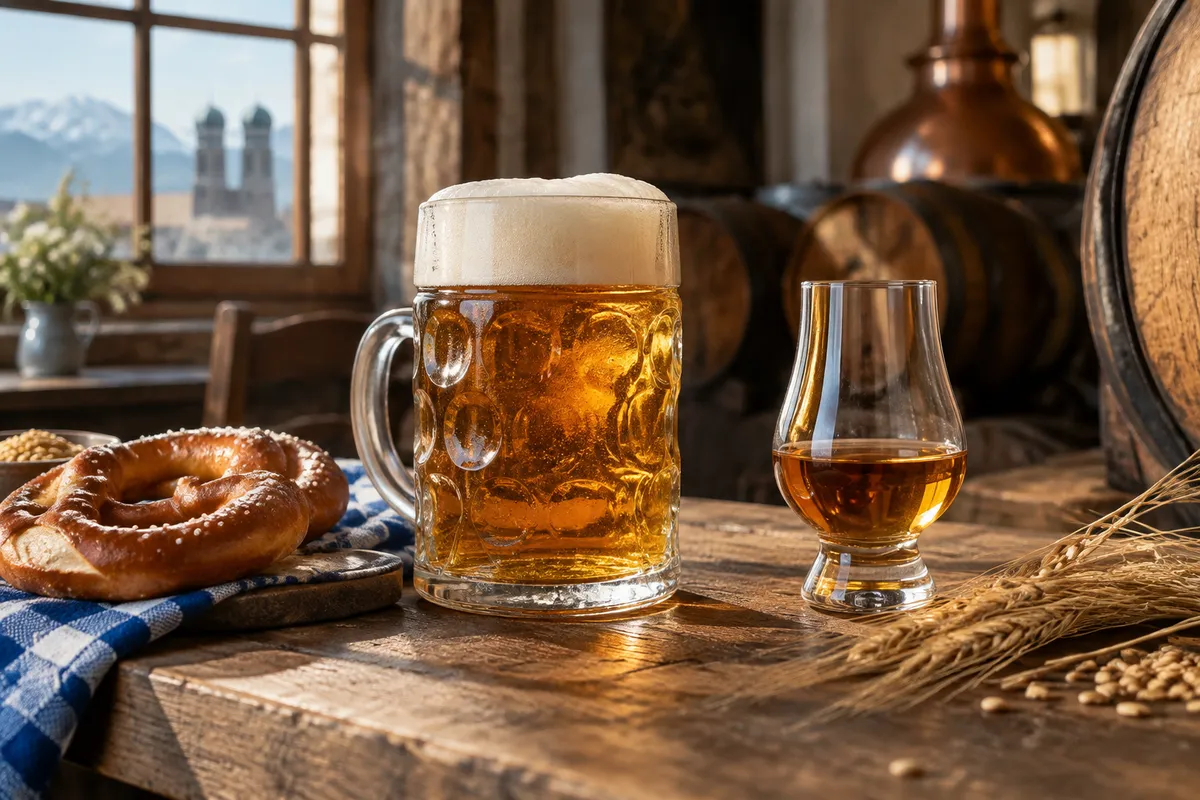
You can buy Scotch at any airport. You can find a German-style beer at a bar down the street from your apartment. So why do people fly across continents to drink them where they're made? Forbes recently explored exactly that, using Munich's Oktoberfest and Scotland's whisky tourism as its examples, and its core argument is simple: provenance adds value. Where something is made, who makes it, and the culture around it give it an emotional pull that a label alone can't.
If you travel for a living (or just like to pretend you do between remote-work calls), this is a useful lens. By the end of this piece you'll have a simple way to plan a trip around one food or drink, and a few habits that make the experience actually mean something.
What "provenance" actually means for a traveler
It sounds like a word from an auction catalog, but the idea is easy. Per Forbes, provenance is about where a product comes from, who makes it, and the culture that surrounds it. Three questions, basically:
- Where? The place itself, with its climate, history, and landscape.
- Who? The people behind it: brewers, distillers, cooks, families.
- What around it? The rituals, the venues, the way locals actually enjoy it.
When you drink whisky in Scotland, you're not just tasting a spirit. You're getting the setting and the story. That's the part you can't pack in a carry-on.
Oktoberfest is the blueprint
Forbes points to Oktoberfest in Munich as an example of experience-led tourism. Think about what it is: a drink most of us know from anywhere, wrapped in a place, a tradition, and a crowd. Nobody goes only for the beer. They go for the whole thing.
That's the template worth stealing for your own trips. Ask what the event or ritual is around a product, not just the product. A tasting in a city bar is a drink. A tradition at the source is a memory.
Scotland's whisky trail: taste plus place
The other example in Forbes' piece is whisky tourism in Scotland. It works for the same reason: the spirit becomes more compelling when you experience it where it's made. For a Gen Z traveler, that's also content gold, but more importantly it gives a trip a spine. Instead of "let's see Scotland," you get "let's follow the whisky," and the itinerary builds itself around it.
How to plan a trip around one taste
This is my own approach, built on the idea Forbes lays out. It's not a formula from the article.
- Pick one food or drink you already love. Enthusiasm carries you through long travel days.
- Find where it's actually made. Not where it's sold, where it's produced.
- Look for the people. A producer, a family-run spot, a local guide. The "who" is half the value.
- Learn how locals enjoy it. Ask what they order, when, and with what.
- Build the rest around it. Stay nearby, eat nearby, and let the region fill in the gaps.
For digital nomads this is especially handy. A single thread, like a drink or a dish, gives a month-long stay shape and keeps you from doing the same café-and-coworking loop everywhere.
Why it feels more premium (and why that's not just hype)
Forbes notes that brands, regions, and creators are leaning into origin stories to stand out in crowded food, drink, and travel markets. That's worth reading with a little skepticism. An origin story can be marketing. But the underlying reason it works is real: when you know where something came from and who made it, you pay more attention, and attention is what makes a taste memorable.
A quick gut-check for whether a "source" experience is the real deal:
- Can you meet or hear from someone who actually makes the product?
- Is the setting connected to how it's made, not just a gift shop?
- Do locals use it in their own routines, not only tourists?
Keep it from becoming a checklist
The point isn't to collect stamps. Culinary travel is booming, per Forbes, because people want more meaningful, place-based experiences instead of generic tourism. Go slow. Stay for a second drink or a second meal. Ask a question you don't need the answer to.
Your next move
Pick the one thing you'd happily eat or drink every day, find where it comes from, and book the trip to that place. Let the taste choose the destination.